
FIVE DAYS from today will be the 54thanniversary of May 13 which was never a racial riot although it was made to look like one.
A senior citizen who lived as a teenager in Kampung Dato’ Keramat tells of his story how that during the May 13 riot in 1969, the Malay neighbours rallied around the family to protect them.
“There were not many Chinese families in the Malay village,” he recalls. “Because I used to visit my Malay friends and even occasionally slept in their homes when the day turned dark – addressing their parents as Pakcik and Makcik – they became like my own uncles and aunties.”
Preferring to remain anonymous, the 70-year-old said he never believes that May 13 was a “racial riot” at all.
Stories of citizens protecting others of another race are many. Prof Datuk Elizabeth Lee, Group CEO of Sunway Education Group, remembers the incident very well.
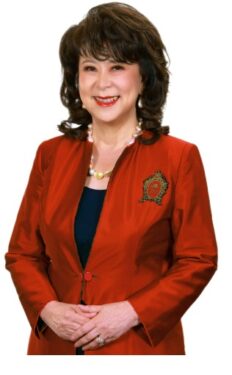
She was only 10 and was caught with her family in the Loke Yew district next to the infamous gangster area behind the Shaw Road Fire and Rescue Services station when the clashes erupted.
“We were stuck in my parents’ shop house in a fiercely guarded Chinese area when the chaos broke out,” she says. “We hid and gave refuge to the neighbour’s Malay security guard until the authorities came days later to rescue the stranded.”
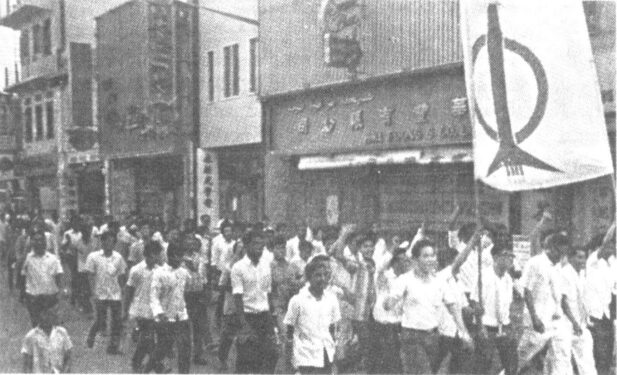
In reality, there were indeed clashes between UMNO under the leadership of the late Datuk Seri Harun Idris Harun who was then Selangor Menteri Besar and some over-zealous members of DAP and Gerakan in Kuala Lumpur – and because there were shouts of racial epithets at each other during an election victory parade – the full-scale rioting which ensued has unfortunately been touted as a ‘racial riot.’
Joanne Lim who was living in Jinjang New Village relates the story when the family managed to contact her late father who was working in Kuantan by phone.
“We were all relieved that our father was safe. Everywhere else in Pahang, the situation was calm,” she says. “My father told us that he and his Malay colleagues were still enjoying their morning breakfast together.”
In 1969, Nik Hisyamuddin Fathi was in Form 5. The retired administrative and diplomatic service officer with three separate government bodies including the Defence Ministry says he did not know much about May 13 because the east coast states were not involved.
“Life went on as usual for us,” he says. “We continued to mingle with the Chinese and Indians as both classmates and school mates.”
From Kuantan, Wong Ping Kow concurs. “We stayed in town in an old double-storey shop house. The police station was not very far away,” he remembers. “But I have heard stories of how in the outskirts, the people in the community actually looked out for one another.”
It never even occurred to Penangite K.E. Gan that the nation was in crisis. “I was a college student in Penang and was not even aware that a night curfew was in operation,” he says.
Dr Daniel Gan, 64, remembers it as a child. “Yes, I heard a lot about riots and killings in Kuala Lumpur. But where I lived in Parit Buntar, Perak, it was peaceful among the local community,” he reveals.
A Sabahan, who prefers not to be named asks why the authorities declared the curfew in Sabah. “The May 13 clashes should have been contained in West Malaysia,” he opines.
What then was the May 13 incident? At best, it was concocted by a group of politicians to de-stabilise the then prime minister a.k.a. Bapa Malaysia Tunku Abdul Rahmah.
Tunku himself had alleged: “You know DS Harun was one of those – Harun, (Tun Dr) Mahathir (Mohamad), (Tun Muhammad) Ghazali Shafie – who were all working with (Tun) Razak (Hussein) to oust me, to take over my place.”
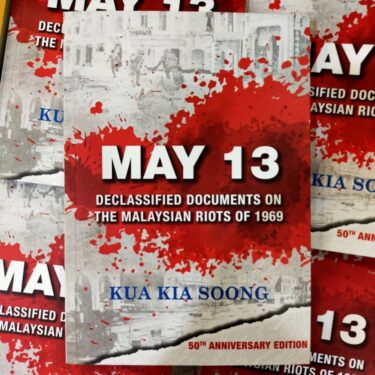
According to a research based on declassified documents in his book “May 13”, Dr Kua Kia Soong wrote, “The author maintains that the May 13 Incident was above all, a coup d’etat by the then emergent Malay state capitalist class to depose the Tunku who represented the outdated Malay aristocracy.”
Moving forward, Malaysians should be happy that the religious and racial harmony has always existed in the country since Independence. Except for the May 13, 1969 incident which has marred the country’s history, Malaysians must learn from this lesson not to be used by politicians to achieve their own political agenda.
We must stand united and make our voices loud and clear that we would not tolerate any political party seeking to play up racial and religious sentiments in the country. Perhaps, the rakyat will have to punish them severely in the coming state elections.
When the rakyat sing a different tune, politicians will have to switch from doing their peacock dance to the duck dance. The ordinary rakyat must dictate the narrative instead of leaving it to politicians. We cannot afford to sacrifice any more lives and allow the politicians to ruin the country anymore. – May 8, 2023
Read prior articles in this series:
The collapse, collapse, collapse mantra that PN is capitalising on
Unity gov’t solid and strong despite chants of impending collapse
Man of the hour: Is Anwar’s anti-graft drive just a fad or a necessity in Madani Malaysia?
Comments
Post a Comment